The calendar of the UK food supply has a logic that predates nutritional science and outlasts most diet frameworks. Seasons turn, produce shifts, and with it the composition of a reasonably varied diet changes, almost without effort. The question is whether most people still eat close enough to this cycle to benefit from it.
The Seasonal Produce Cycle in a UK Context
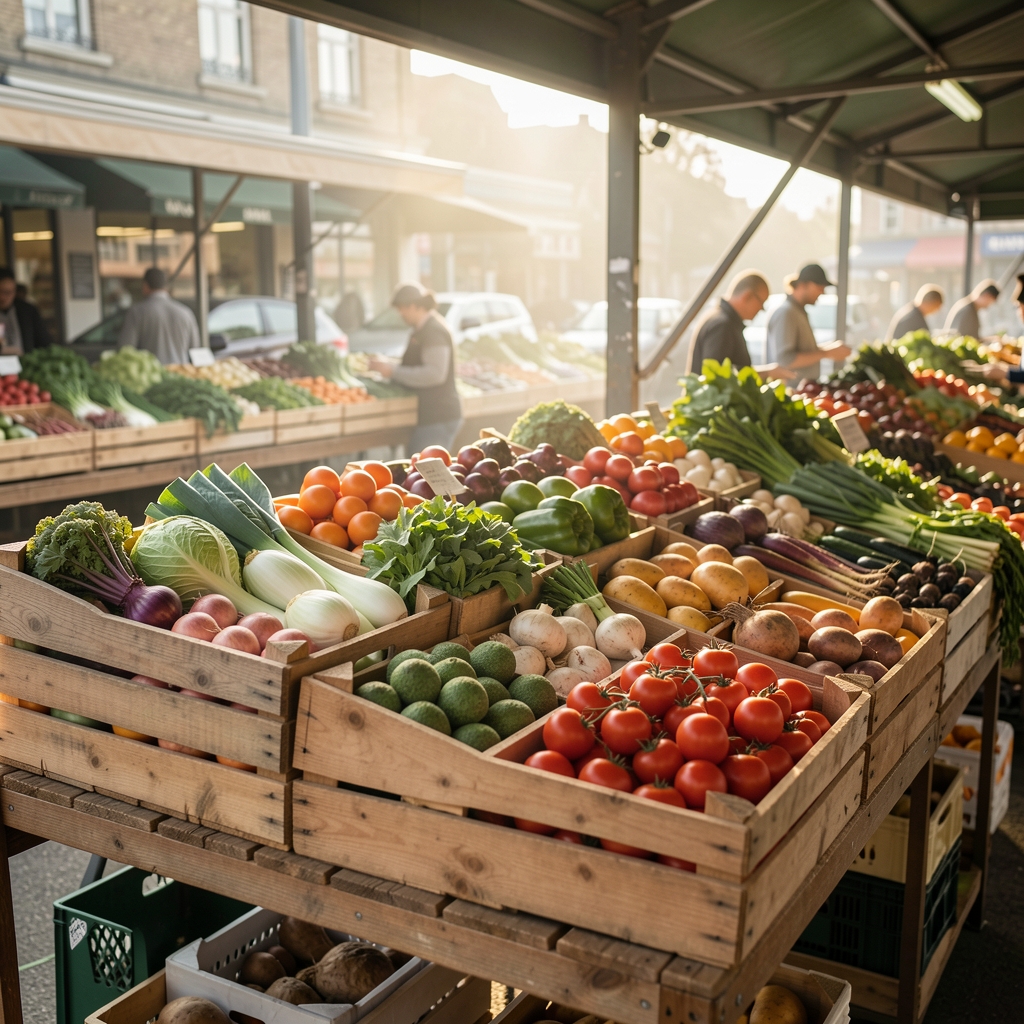
British seasonal eating has changed substantially in the past three decades. Year-round supermarket availability of out-of-season produce has made the concept of seasonal eating feel optional rather than structural. Yet the pricing, quality, and nutritional density of in-season produce still differs from that of produce imported out of season, transported over longer distances, or grown under artificial conditions.
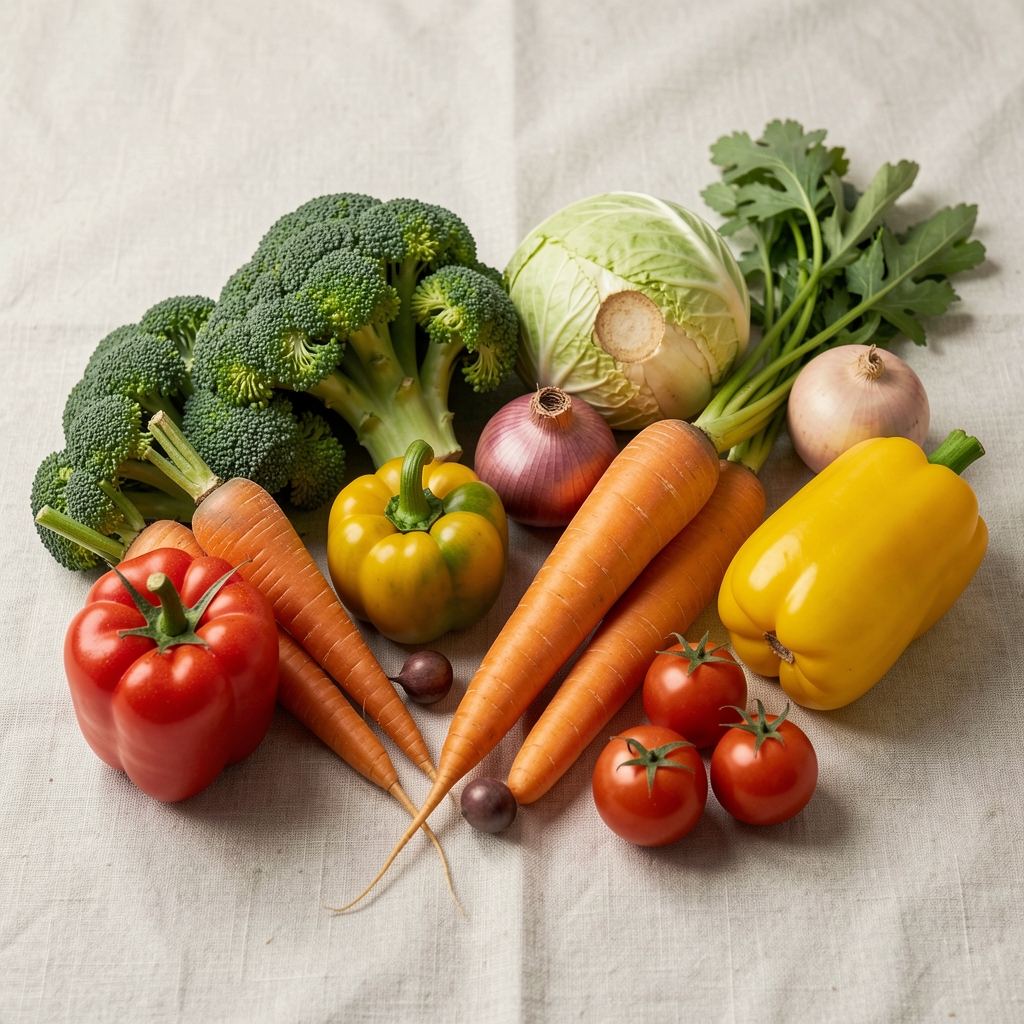
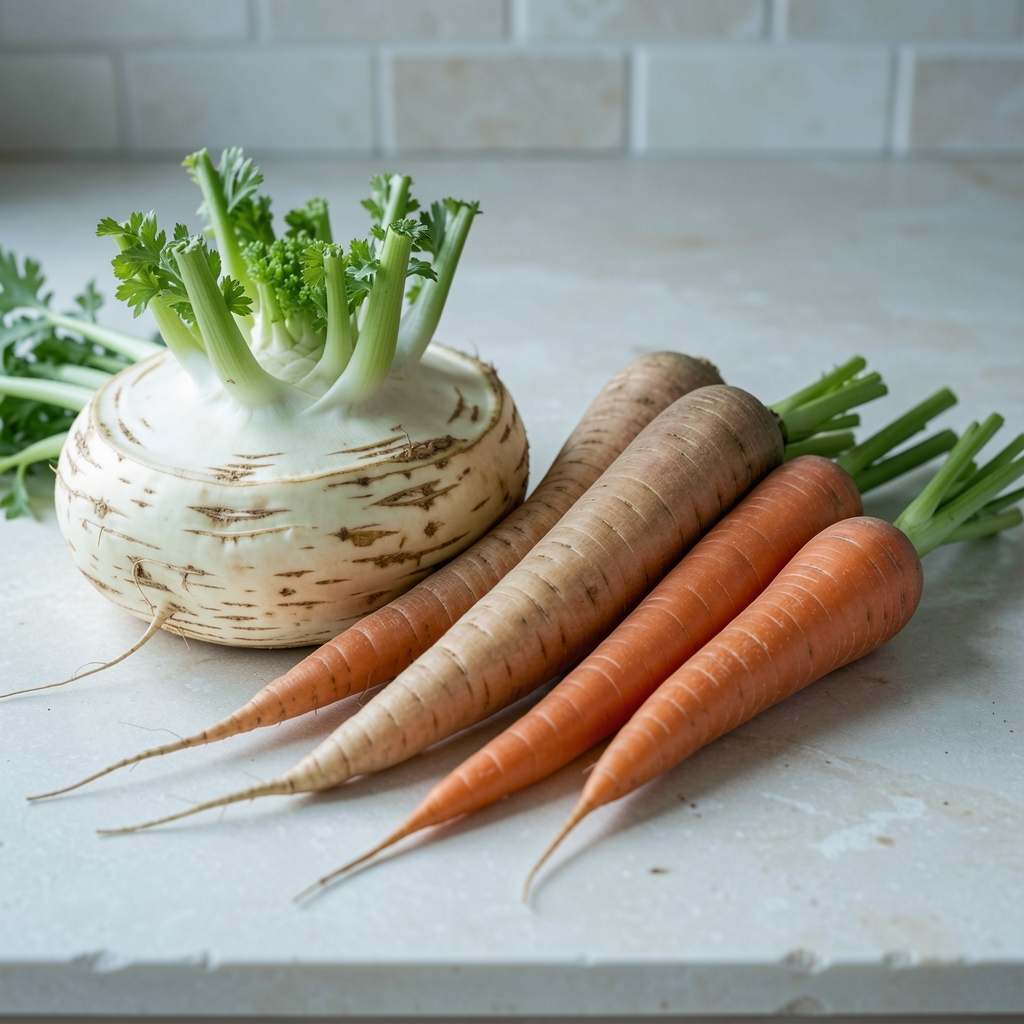
In practical terms, this matters most for vegetables and fruit. Root vegetables — parsnips, swede, turnip, celeriac — peak in autumn and winter, are cheapest at that time, and keep well at room temperature or in a cool corner. Spring brings purple sprouting broccoli, asparagus, new-season carrots; summer, courgettes, tomatoes, broad beans. Each shift brings a natural change in the composition of a home-cooked plate, and with it a change in the nutritional profile of the week's eating.
Eating seasonally is not a rigid rule to follow but an orientation to consider. Even a partial alignment — buying the cheapest vegetables of the week, which are almost always the ones in season — introduces variety and density without additional effort or cost.
"The cheapest vegetables of any given week are almost always the ones the season is currently producing. The calendar and the shopping list are already aligned — they just need to be read together."
Nutritional Variety and Its Relationship to Weight
The link between dietary variety — specifically across the vegetable and fruit categories — and weight balance is not a direct causal mechanism but an associative pattern. Diets higher in vegetable variety tend to be higher in fibre, which supports a sense of fullness between meals. They tend to be lower in energy density, meaning more volume for the same caloric intake. They tend to crowd out more processed choices simply by occupying more of the plate and more of the shopping basket.
None of this operates as a simple exchange. A plate richer in seasonal vegetables is not an assurance of any particular weight outcome. What it does is alter the conditions: the composition of the meal, the sense of fullness it produces, the nature of the hunger that follows it. Over weeks and months, these altered conditions produce different patterns.
The nutritionist's perspective here is not that vegetables cause weight change but that a diet low in vegetables creates conditions — lower satiety, lower nutrient density, higher reliance on processed convenience foods — that are associated with gradual weight gain over time. Introducing variety through seasonal produce changes some of those conditions.
Plant-Based Meals Without the Label
Plant-based eating has become a category with commercial associations and ideological weight. The practical value of increasing the proportion of plant-based meals in the week does not require any particular label or identity. A lentil soup on a Tuesday, a roasted vegetable tray on a Thursday — these are not statements about eating philosophy; they are contributions to nutritional variety and fibre intake.
Legumes — lentils, chickpeas, black beans, butter beans — are among the most nutritionally dense and cost-effective foods available in the UK. They provide protein and substantial fibre, which together contribute to a sense of satiety that supports portion awareness without effort. A meal built around legumes, with seasonal vegetables and a whole grain, requires no specialist knowledge to prepare and produces consistent satiety.
Introducing one or two such meals per week into a diet that currently contains none is a modest change with a disproportionate effect on the nutritional profile of the week. The season determines which vegetables accompany them; the result is a form of variety built into the rhythm of the week rather than imposed on it.
Fruit Intake and the Daily Pattern
Fruit occupies a contested position in nutritional writing. Its natural sugar content attracts concern; its fibre, vitamin, and mineral content attracts endorsement. In the context of everyday eating rather than specialised programmes, whole fruit as part of a varied daily pattern is straightforwardly supportive of nutritional balance. The concern about sugar applies more precisely to fruit juice and processed fruit products than to whole fruit.
Seasonal fruit in the UK spans a relatively narrow window — British strawberries and stone fruit in summer, apples and pears in autumn — but imported fruit from southern Europe extends practical access to fresh seasonal options through most of the year. The relevant observation is less about geography and more about freshness and variety: the same apple, bought weekly in the same form, contributes less variety than rotating through different fruits as they become available.
The daily pattern that includes fruit most reliably is one in which fruit is positioned as a default snack or breakfast component rather than an addition to an already structured eating occasion. When it is present in the kitchen and already prepared — washed, cut, in a visible bowl — it is eaten. When it requires effort to obtain or prepare, it tends not to be.
Cooking as the Link Between Produce and Plate
The relationship between seasonal produce and the actual plate is mediated by cooking. Produce that is purchased and not prepared has no nutritional effect. The single largest predictor of whether vegetables and fruit make it into the weekly eating pattern is whether the household has a functional routine for preparing them — not culinary skill in a complex sense, but a few reliable methods that can be applied without deliberation.
Roasting is the most forgiving method for the widest range of vegetables. A tray of whatever is in season — cut into similar sizes, dressed with oil and salt, in a hot oven for thirty to forty minutes — produces a usable component for several meals: as a side, incorporated into a grain dish, added to a soup, eaten cold the following day. It requires minimal skill and minimal time investment per unit of output.
Developing two or three such reliable methods for seasonal produce changes the relationship between what is purchased and what is eaten. It closes the gap between intention and practice at the point where most nutritional intentions actually fail.
- ■Kale, cavolo nero, and purple sprouting broccoli are at their peak. All roast well.
- ■Celeriac and swede are cheap, dense, and hold well in the refrigerator for a week.
- ■Blood oranges and clementines are in season from southern Europe — good rotation for fruit.
- ■Dried and tinned legumes (lentils, chickpeas) have no seasonal constraint — always available.
Articles published on Arelonis Compendium are editorial in nature and reflect the writers' observations on everyday nutrition practices and weight awareness. The content is not intended as professional advice, nor as guidance for the management of any specific condition. Readers with specific concerns about their daily routines are encouraged to speak with a qualified wellness professional.